About 2 hours on the water
Small groups — max 8 guests per trip
Season: June to October
Departures: 7:45 am, 9:45 am, 11:45 am and 1:45 pm
Whale Guarantee: no whales? Come back and try again, on us
How the Trip Works
Whale watching trips check in and return to Diving Byron Bay in the heart of Byron Bay CBD. After checking in at the shop, you'll be transferred to the launch point at The Pass boat ramp with a quick 5-minute shuttle bus ride.
After a safety briefing, you'll jump aboard our whale watching RIB, Plucka Duck. Our RIB is specifically designed for beach launches and ocean conditions along the Byron Bay coastline. To get aboard, guests will need to wade into the water and get their lower half wet while boarding through small waves.
As soon as everyone is safely on board, the skipper will cross the surf line and head out toward the horizon looking for whales. Sometimes we'll spot a splash right away, and sometimes we'll cover a bit more distance exploring the bay until we find one. Our experienced whale watching guides are on the lookout the whole time, sharing their knowledge of the area's history and marine life, the whale migration, and the various whale behaviours you'll get to see.
Every trip is led by a local guide who's spent years on this stretch of coast and knows it inside out. As we cruise the bay, they'll talk you through the whales' epic migration from the Antarctic feeding grounds to the warm waters off Queensland, point out other marine life and birdlife as we pass Nguthungulli Julian Rocks, and share stories about the history and culture of Byron Bay along the way.
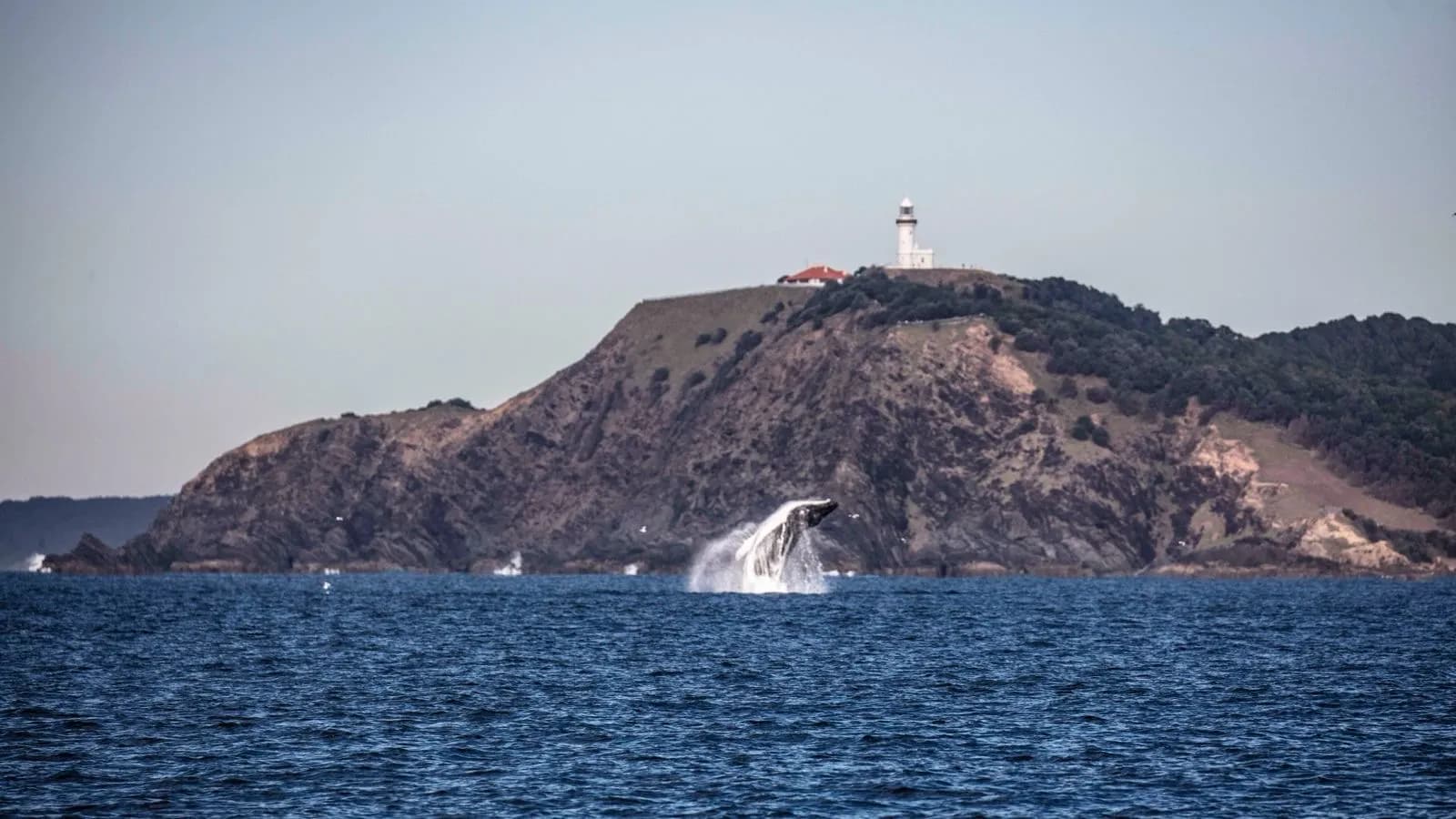
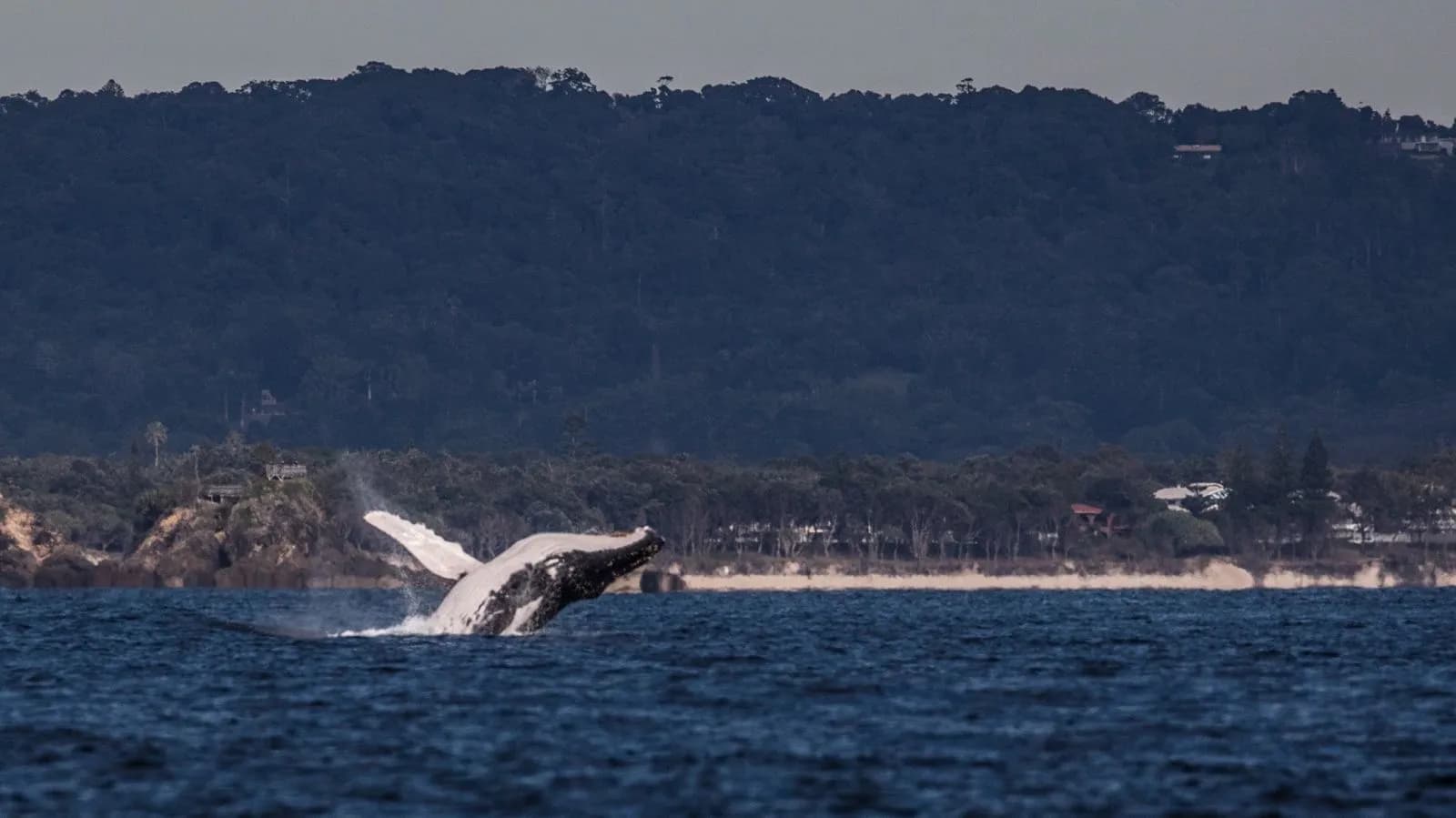
“We'll spend about two hours roaming the bay, sometimes drifting with the engines off while a curious whale comes in for a closer look.”
We'll spend about two hours roaming the bay and observing fascinating whale behaviour. If we're lucky, we may stop and drift with the engines off while a friendly whale comes in to take a closer look at us, or we may cruise along at a safe distance while a mum and calf breach in sync, over and over.
When there's a quiet moment, we'll stop and lower a hydrophone into the water to listen to the whales' songs.
While the whales are the highlight, we also have very good chances of encountering dolphins, turtles coming up for a breather, and plenty of birds flying and roosting around Nguthungulli Julian Rocks.
Once the tour comes to an end, we'll return to the beach at The Pass, where the shuttle bus will be waiting to take you back to the Diving Byron Bay shop in town.
Good to Know Before You Go
- Because boarding involves moving through water and climbing onto the vessel, a reasonable level of fitness and mobility is required. Guests should be able-bodied and comfortable standing in shallow water with waves around them before stepping onto the boat.
- We recommend wearing shorts or clothing suitable for getting wet. There's space on board for towels so you can dry off once you're on the boat, and ponchos are provided to help protect your upper body from spray and splashing.
- Whale season runs through the cooler months, so we also recommend bringing warm clothing. Even on clear days, conditions offshore can feel cold once the boat is moving.
Whale Behaviours You Might See
Every trip is different — here are some of the behaviours our guides keep an eye out for.
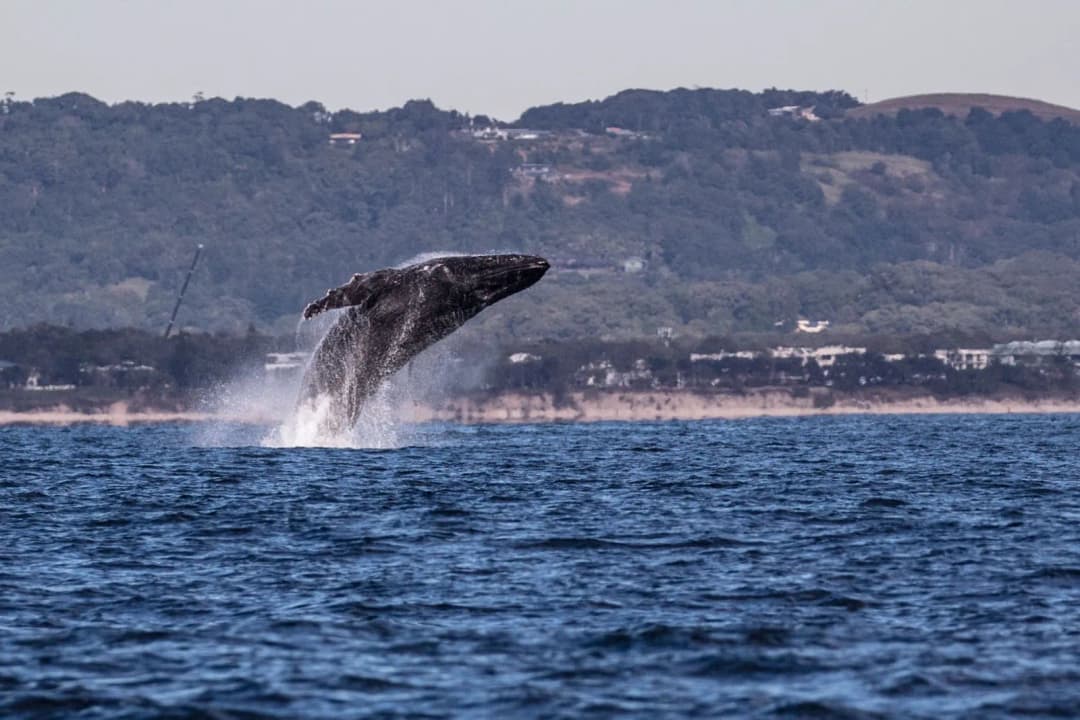
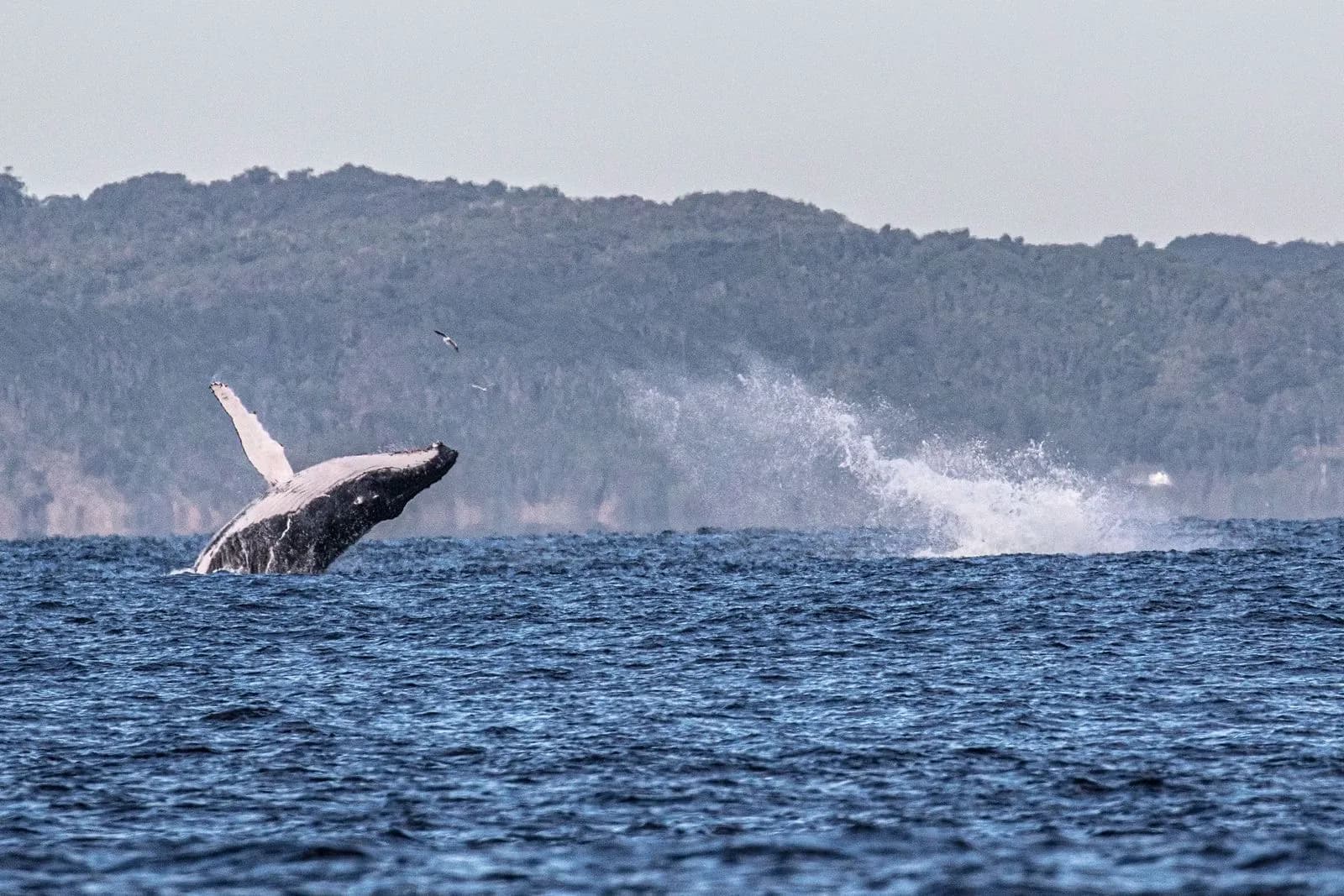
Breaching
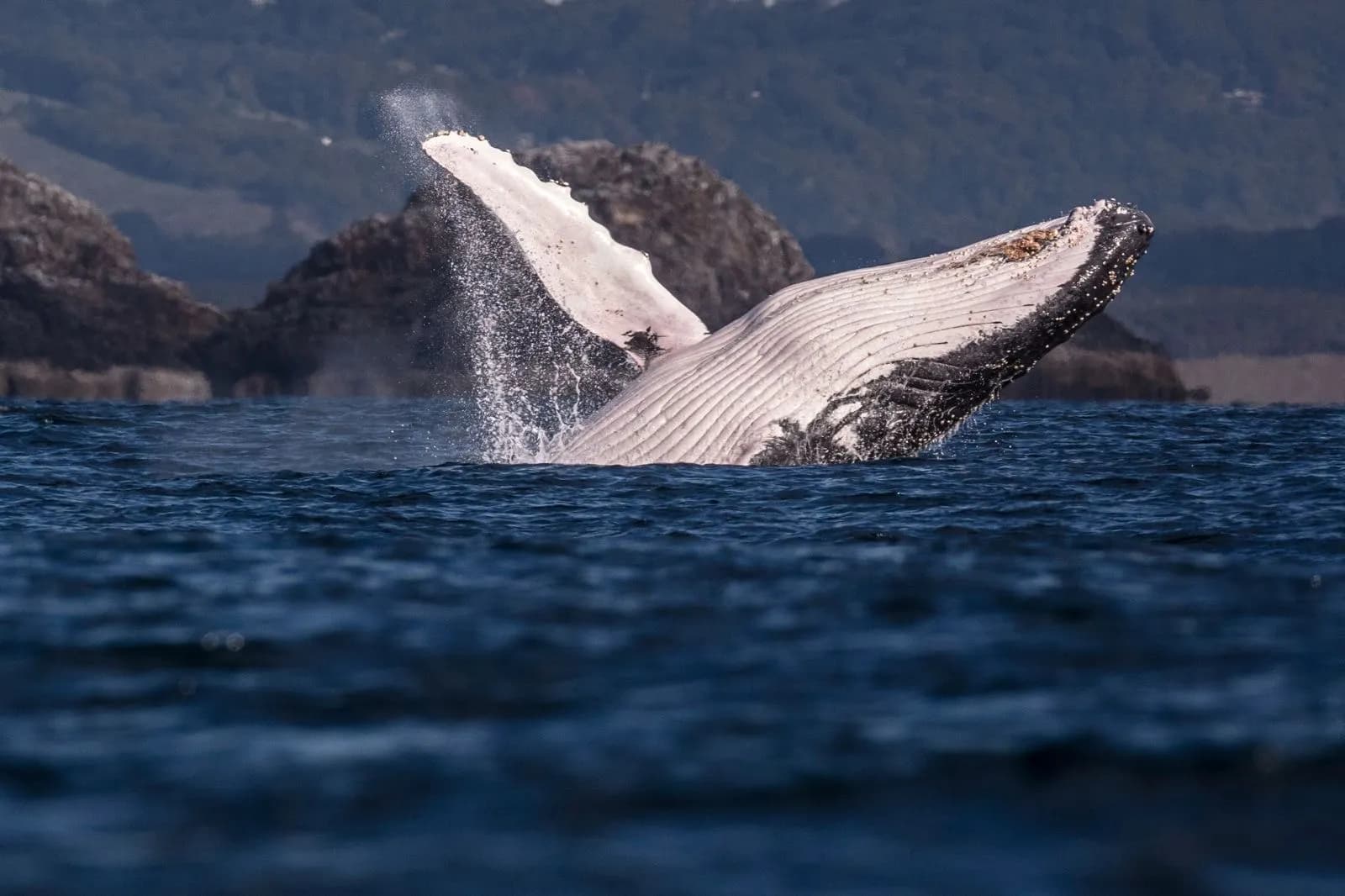
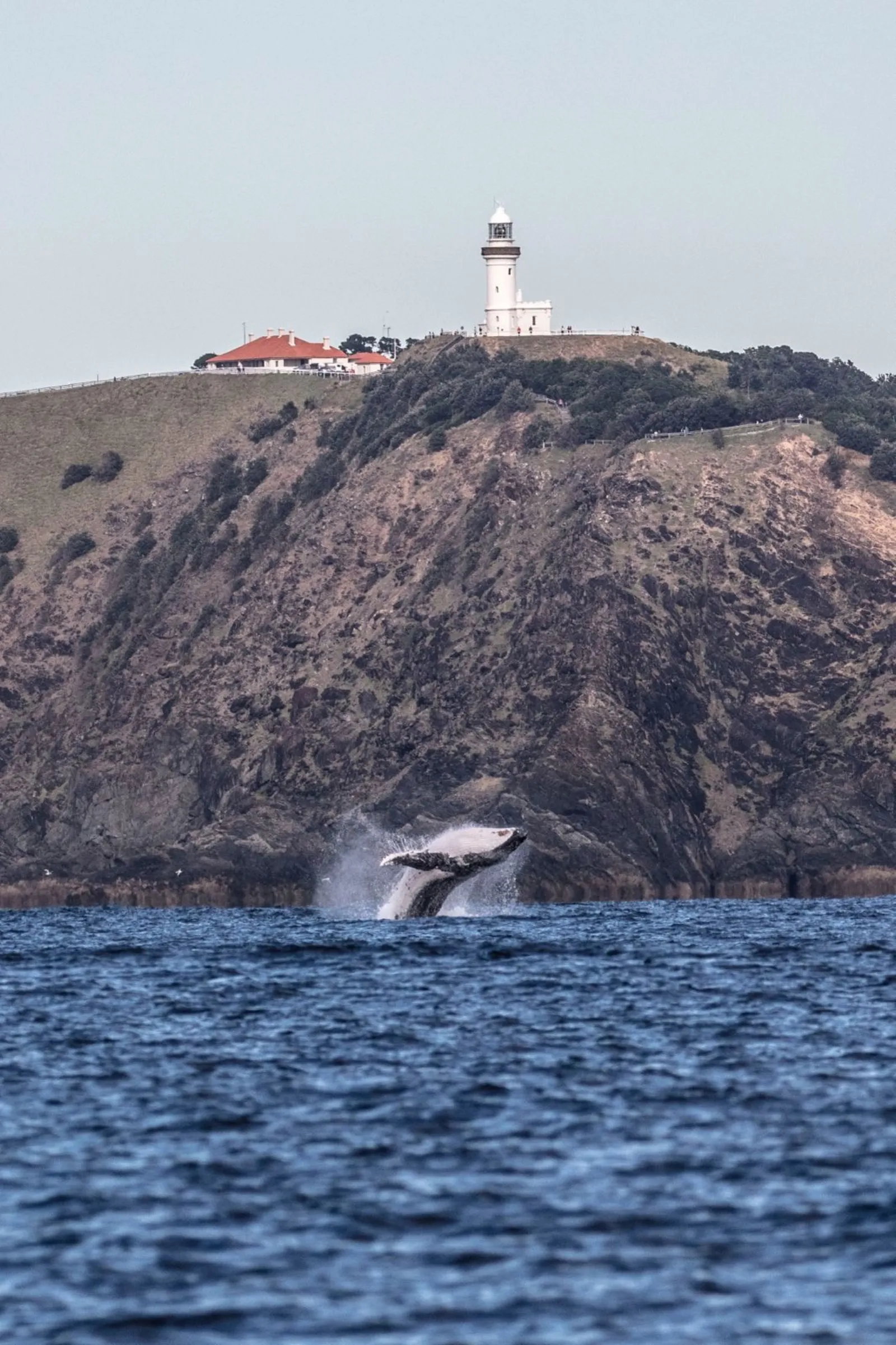
A whale launches most or all of its body out of the water before crashing back down.
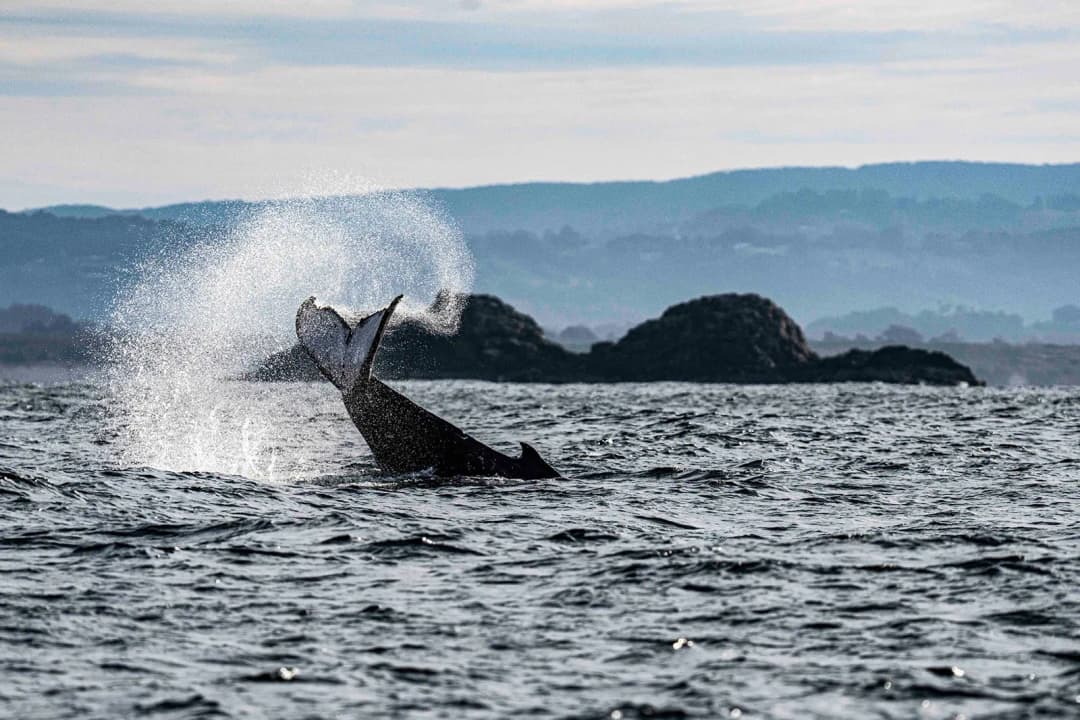
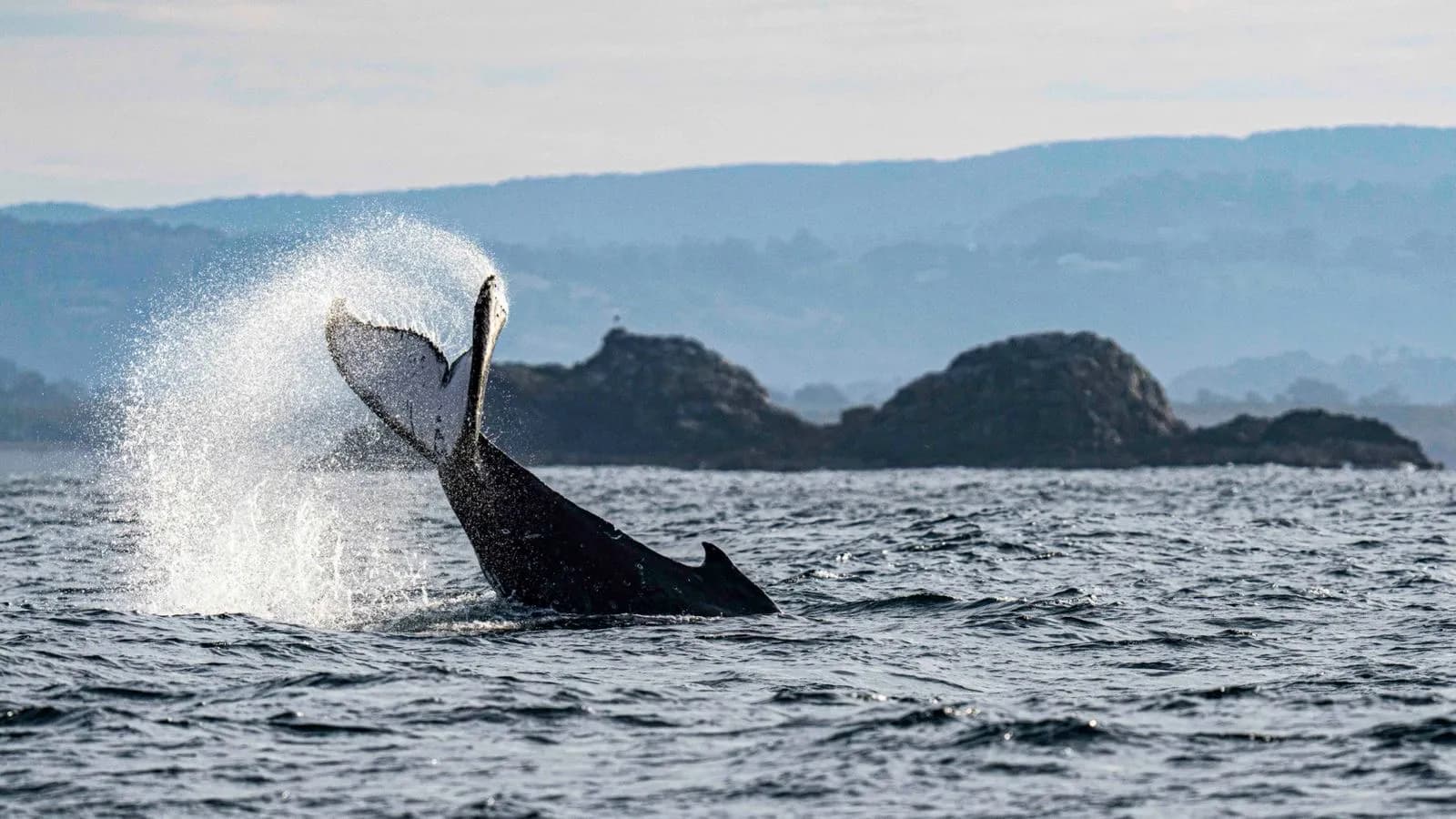
Tail Slapping
The whale repeatedly slaps its tail fluke on the surface, thought to be a form of communication.
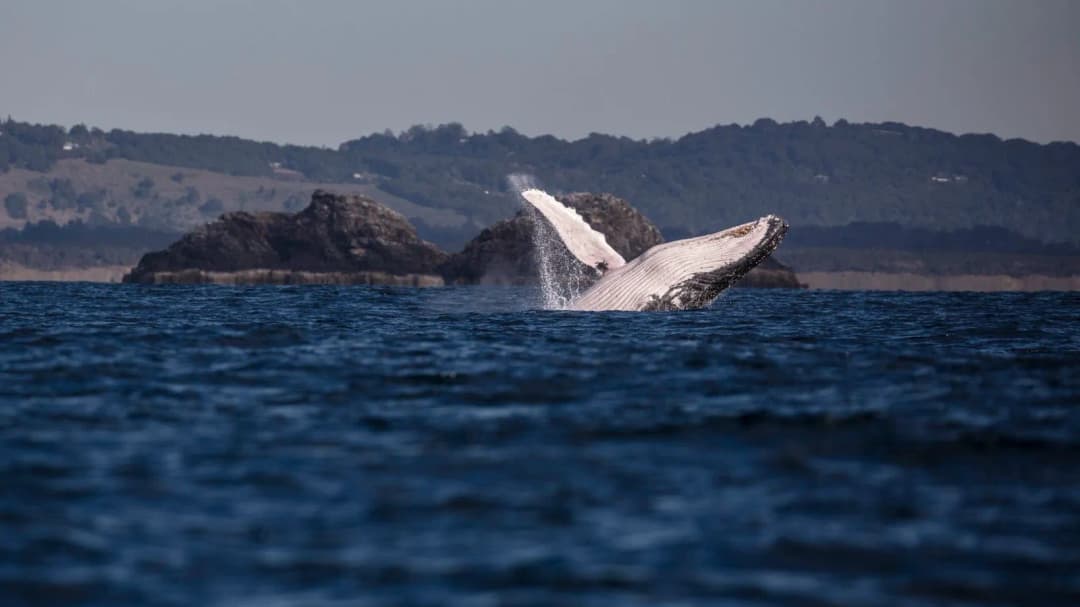
Pectoral Slapping
Rolling onto its side or back, the whale slaps one or both long pectoral fins on the water.
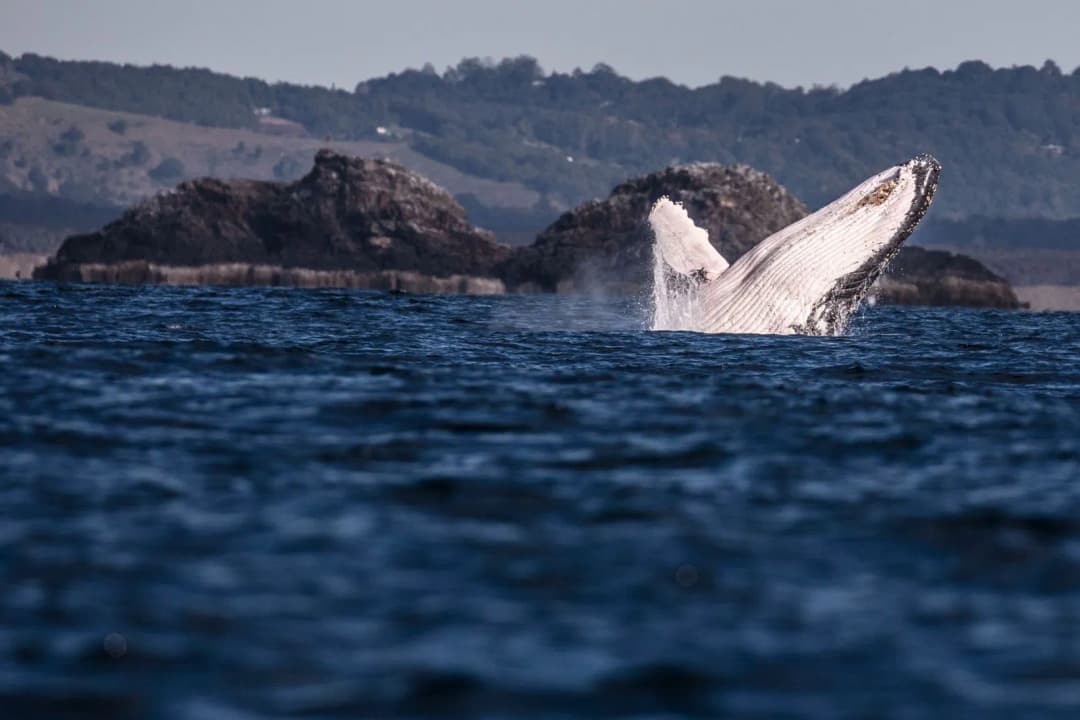
Spy Hopping
The whale rises vertically out of the water to get a look at what's happening above the surface.
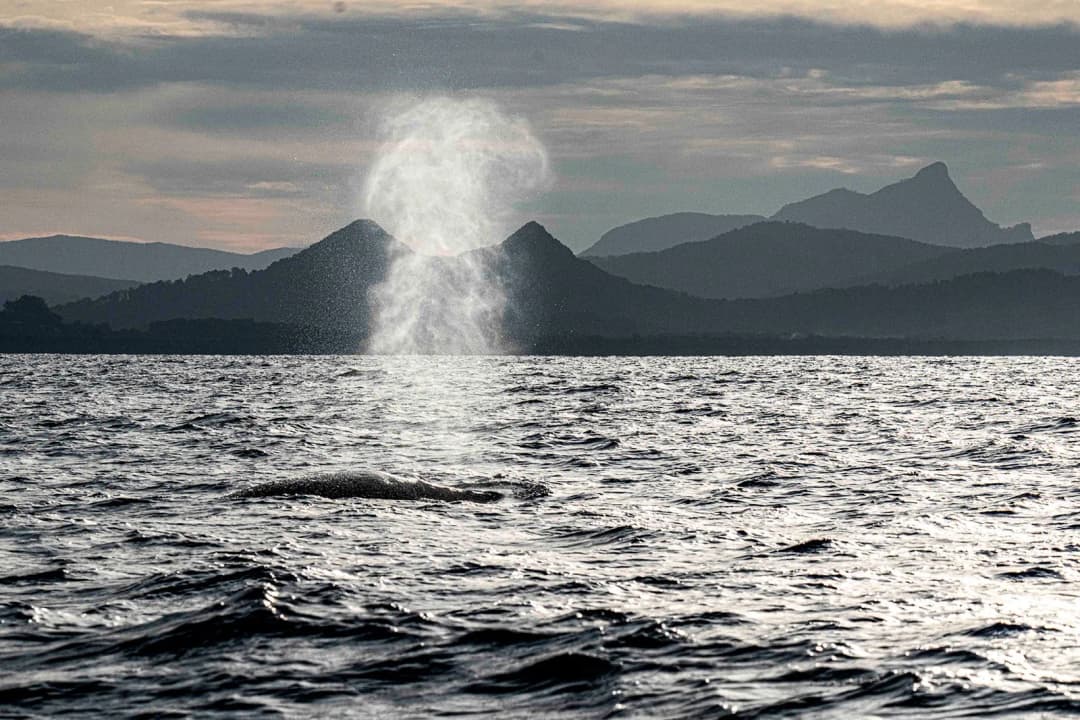
Blowing & Spouting
Often the first sign of a whale, a burst of spray as it exhales at the surface.
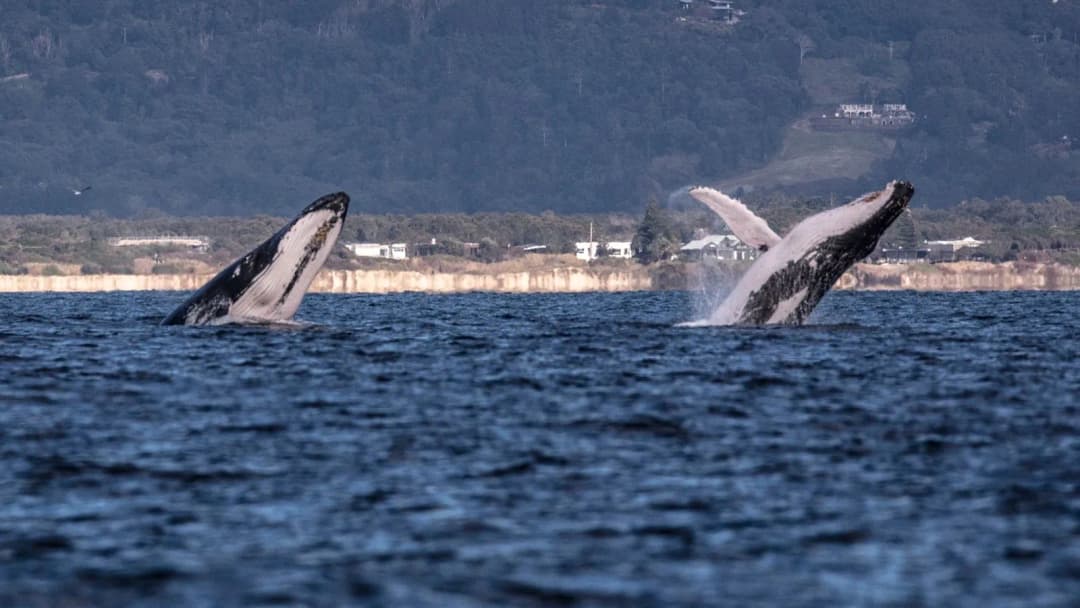
Mother & Calf
One of the most special sights, a mum and calf travelling, resting or playing together.
Ready to Meet the Humpbacks?
Season runs June to October and trips are limited to 8 guests — spots fill up fast.
When to Go
Best Time to See Whales in Byron Bay
Whale watching in Byron Bay runs every year from June to October, during the humpback whale's migration along Australia's east coast. Here's how the season unfolds, month by month.
Whale Season Overview: June to October
More than 50,000 humpback whales travel past Byron Bay each year on their migration between Antarctic feeding grounds and warmer waters off Queensland. Our whale watching season runs June to October, when sighting numbers are at their highest.
Northern Migration: June to August
From June, northbound humpbacks start passing Byron Bay on their way to the Coral Sea to breed and calve. Whales travelling north tend to move with purpose, but it's common to see breaching, tail slapping and spouting as they pass, and this is when our whale watching tours in Byron Bay first pick up pace for the season.
Peak Season: August to October
This is the busiest stretch of the whale watching season in Byron Bay, as northbound and early southbound whales overlap offshore. Numbers are at their highest, and our guides are often spotting multiple pods in a single trip out from The Pass.
Southern Migration with Calves: September to October
From September, the same whales begin their journey back south, many now travelling with newborn calves. Mothers swim closer to shore to rest in calmer water, and curious calves are typically more playful and active at the surface than adults.
Why Whales Come So Close to Byron Bay
Cape Byron is the easternmost point of mainland Australia, and the headland at Nguthungulli Julian Rocks pushes the migration path unusually close to shore — one of the reasons Byron Bay is regarded as one of the best whale watching spots in Australia.
2026 Whale Season Outlook
The eastern Australian humpback population has been growing roughly 10–11% a year since whaling ended, and marine scientists are forecasting another strong season for 2026 as numbers continue to climb past the 50,000 mark.
Real Research, Not Just Sightseeing
Supporting Whale Research at Nguthungulli Julian Rocks
The hydrophone we lower into the water on every trip isn't just for guests — since 2025, Diving Byron Bay's citizen scientists have been an official deployment partner for Living Ocean's OceanSounds program, with an underwater acoustic recorder deployed at Nguthungulli Julian Rocks to capture whale activity through the migration season. We also photograph and submit whale ID shots taken on board to Happywhale, a global citizen-science platform that tracks individual whales by their unique tail markings.
What Is OceanSounds?
OceanSounds is a marine acoustic-monitoring program run by Living Ocean, a registered Australian marine conservation charity. It uses small underwater recorders called Hydromoths to capture whale, dolphin and fish sounds, building a "soundscape" of ocean life along the east coast.
Our Role as a Deployment Partner
Diving Byron Bay's citizen scientists are one of OceanSounds' two named on-water deployment partners and have deployed a Hydromoth recorder at Nguthungulli Julian Rocks since 2025, right where our whale watching trips operate.
Where the Data Goes
Recordings feed into the Whales and Climate Research Program's ECOMAS initiative (East Coast Ocean Monitoring Acoustic System), with scientific guidance from Griffith University's Dr Jan-Olaf Meynecke and support from Google AI, helping map marine biodiversity and track whale activity along Australia's east coast.
Why Nguthungulli Julian Rocks Matters
As a marine park sitting directly on the humpback migration path, Nguthungulli Julian Rocks is a valuable listening point for understanding how whales use these waters. Every whale watching trip with Diving Byron Bay helps support this ongoing conservation work.
Every Tail Tells a Story: We Photograph for Happywhale
Humpback whales can be identified individually by the unique black-and-white pattern on the underside of their tail fluke — as distinctive as a fingerprint. Whenever we get a good look at a fluke on a trip, our guides photograph it and submit the image to Happywhale, a citizen-science platform that uses image-recognition technology to match individual whales against a global database of sightings. If your whale has been seen before — even on the other side of the world — Happywhale can tell us where, building up a picture of that individual's migration history over time.
Questions
What is the minimum age for whale watching?
Whale watching is suitable for children aged 5 and up. Children aged 5 to 12 must have an accompanying adult booked on the same trip.
When is the best time to go whale watching in Byron Bay?
Our whale watching season runs June to October. September and October, when whales return south with their calves, are often the most rewarding months to book a trip.
How long does the whale watching tour take?
You'll spend around two hours on the water looking for whales, plus check-in at Diving Byron Bay and a short shuttle to and from the launch point at The Pass.
What is the Whale Guarantee?
If you don't see a whale on your trip, you're welcome to come back and try again, on us.
Will I get wet on the whale watching tour?
Yes. Our RIB launches from the beach at The Pass, so you'll wade into the water and get your lower half wet boarding through small waves. Ponchos are provided for spray once you're underway, and there's room on board for towels.
Is whale watching in Byron Bay suitable for everyone?
Because boarding involves wading through water and climbing onto the boat, guests need a reasonable level of fitness and mobility, and should be comfortable standing in shallow water with waves around them.
Will I see anything other than whales?
Quite likely — we have good chances of spotting dolphins and turtles, plus birdlife around Nguthungulli Julian Rocks, on most whale watching trips.
What should I wear or bring on a whale watching tour?
Wear shorts or clothing you don't mind getting wet, and bring warm layers — whale season is in the cooler months, and it can feel cold once the boat is moving, even on a clear day.
Where Do Byron Bay Whale Watching Tours Depart From?
Planning a whale watching trip in Byron Bay? One handy thing to know when you're comparing tours is where each boat launches from. Whale watching happens from a few different spots along this stretch of coast, and the right one for you often comes down to where you're staying and how you're getting around.
The Pass, Byron Bay
The Pass is the beach launch right in Byron Bay itself, just minutes from the town centre. Diving Byron Bay's whale watching tours check in at our shop on Byron Street, in the heart of the Byron Bay CBD, and a short shuttle takes you to and from the launch at The Pass. If you're staying in town, it's an easy option — walkable or a quick taxi from most accommodation. Launching from The Pass also puts you close to the migration path around Cape Byron and Nguthungulli Julian Rocks, so more of your time on the water is spent with the whales.
Brunswick Heads
About 15–20 minutes north of Byron Bay, Brunswick Heads has a lovely boat harbour and a few tours depart from there. It's an easy drive if you have a car or don't mind arranging transport.
Ballina
Around 30 minutes or so south of Byron Bay, Ballina is another departure area for tours in the region.
Which is right for you?
All of these are great ways to get out among the humpbacks — the region is lucky to have several excellent operators. If you're based in Byron Bay and would rather not drive, a tour that checks in and finishes right in town is the simplest choice. If you're already heading north or south, a harbour departure might suit your day better.
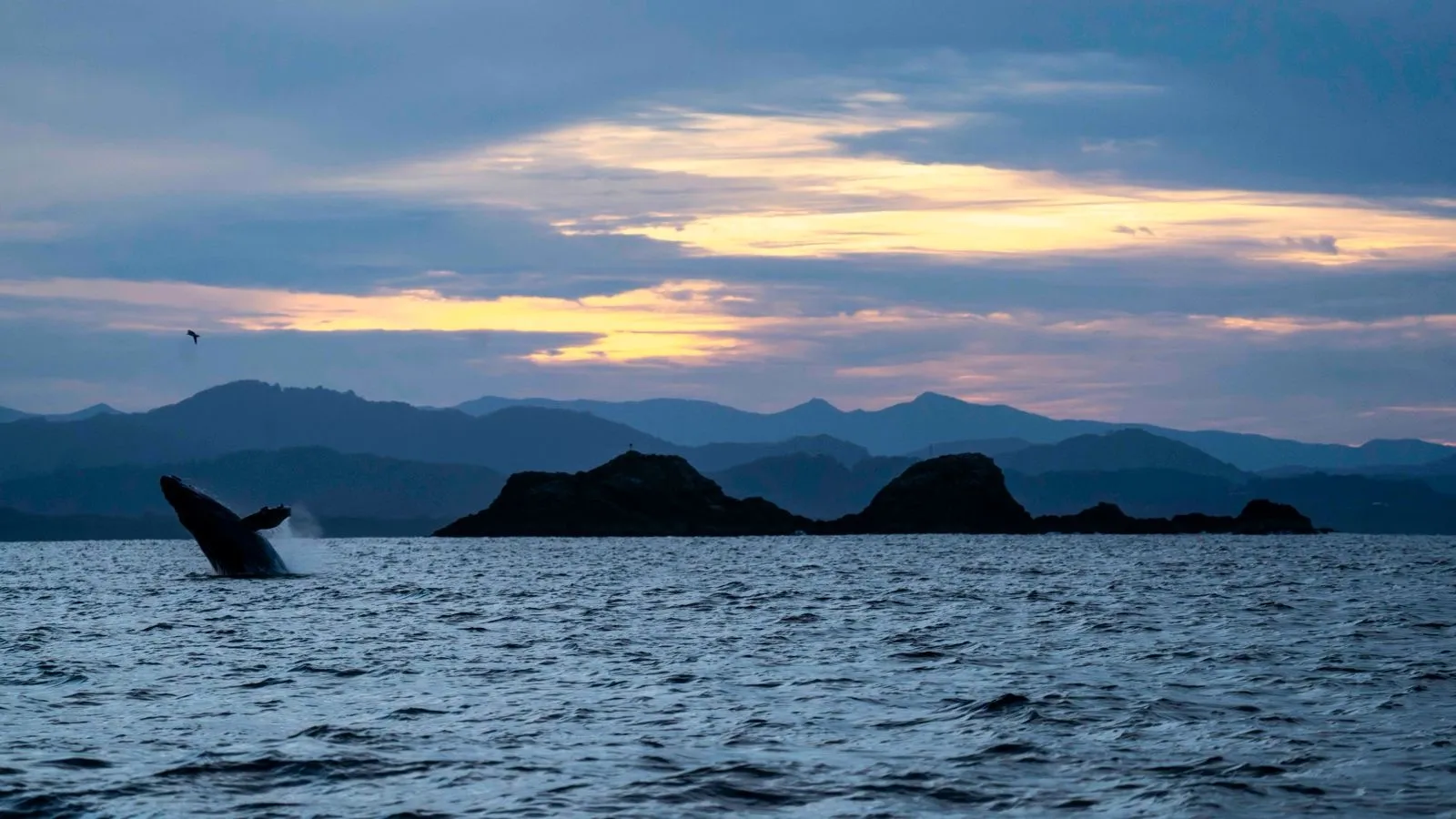
Whale Watching from the Heart of Byron Bay
Diving Byron Bay's small-group whale watching tours (maximum 8 guests) run from June to October, check in right in the Byron Bay CBD, and launch from The Pass. Every trip comes with our Whale Guarantee: if you don't see a whale, you're welcome to come back and try again.
BOOK YOUR WHALE WATCHING TRIP